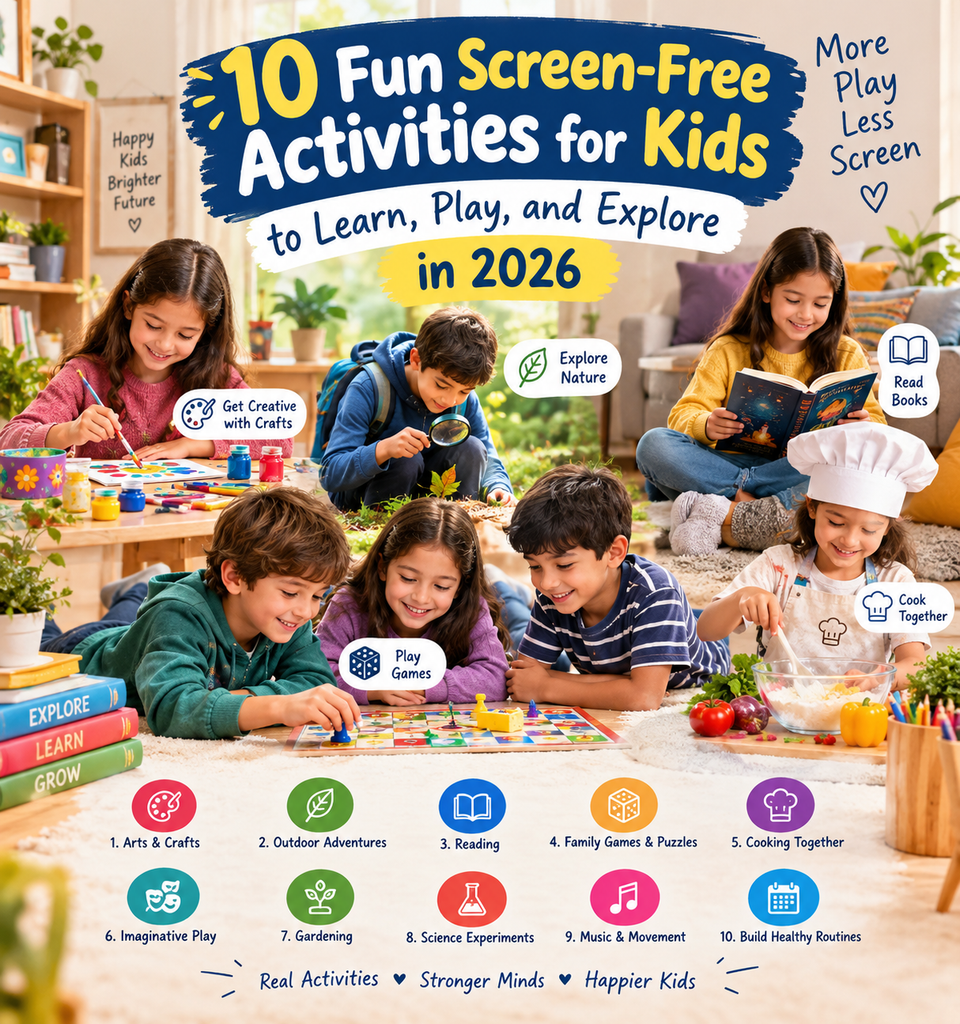
10 Fun Screen-Free Activities for Kids to Learn, Play, and Explore in 2026
In a world filled with smartphones, tablets, video games, and endless online entertainment, finding meaningful ways to keep children occupied without screens can feel challenging. While technology has its place in modern childhood, kids also need opportunities to explore, create, move, and connect with the people around them.
The good news? Screen-free activities for kids do not have to be complicated, expensive, or time-consuming. From creative art projects and exciting outdoor adventures to family games and simple kitchen experiments, there are plenty of enjoyable ways to make everyday moments more meaningful.
Whether you are a parent looking for weekend inspiration or searching for easy activities to keep your children busy after school, these ideas offer a practical starting point. The best part is that many of them require little preparation while helping children develop valuable life skills.
1. Get Creative with DIY Arts and Crafts
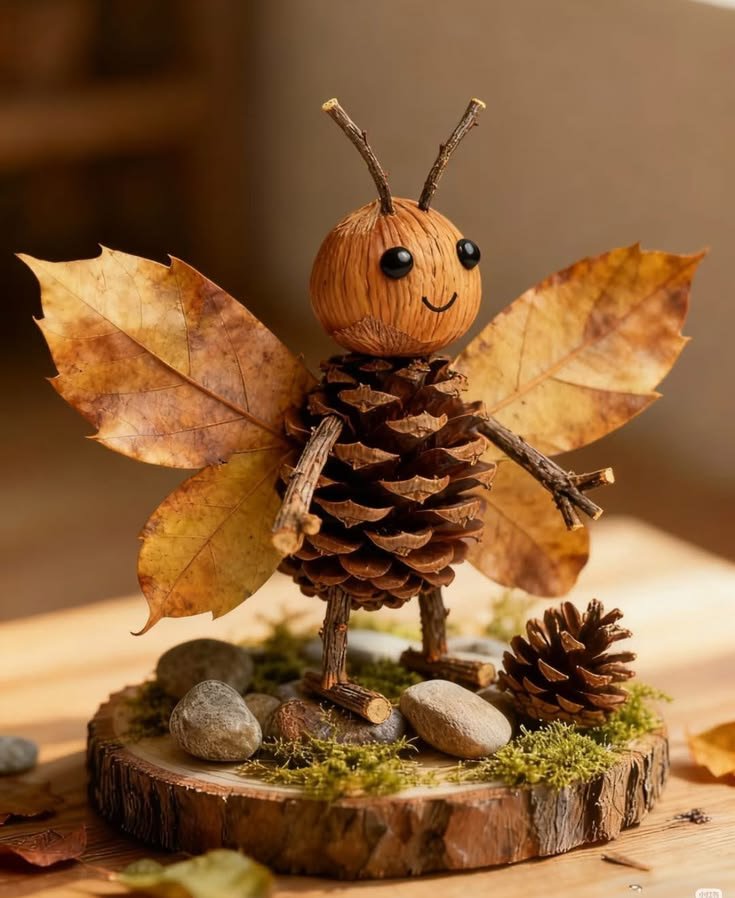
Arts and crafts are excellent screen-free activities because they allow children to express their imagination while developing fine motor skills. You do not need expensive supplies to get started. Paper, cardboard boxes, washable paints, glue sticks, and recycled materials can become the foundation for exciting projects.
Encourage children to create greeting cards, decorate picture frames, make paper animals, or design their own miniature houses. Younger children can enjoy simple colouring activities, while older kids might prefer more detailed projects.
Parents love these activities because they encourage independent play and provide opportunities to discuss colours, shapes, patterns, and creative ideas.
Parent-friendly tip: Keep basic craft supplies together in a small box so children can start creating whenever inspiration strikes.

2. Plan Outdoor Adventures and Nature Walks
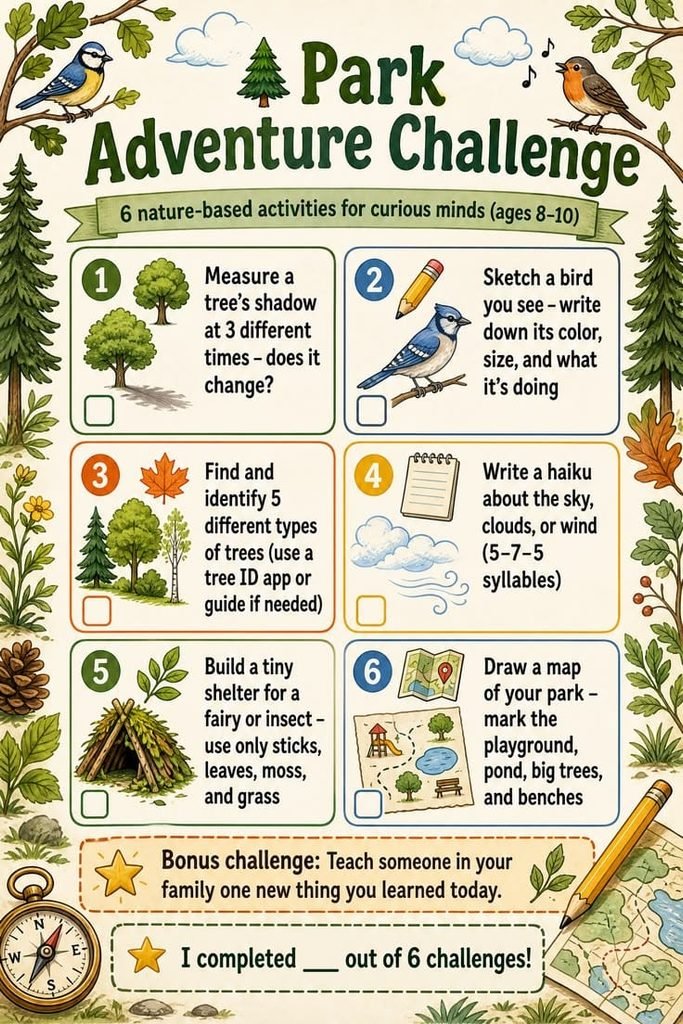
Fresh air and physical movement are essential parts of a balanced childhood. Outdoor activities give children a break from digital entertainment while encouraging curiosity about the natural world.
Take your kids on a nature walk and challenge them to find different leaves, interesting stones, flowers, or birds. You can also organize a backyard treasure hunt or create a simple obstacle course using cushions, cones, and other safe household items.
For families without gardens, a nearby park or safe outdoor space can provide plenty of opportunities for exploration.
These adventures help children practise observation, develop coordination, and appreciate their surroundings. They also create opportunities for parents and children to spend quality time together.
Parent-friendly tip: Turn an ordinary walk into a game by creating a short nature checklist before leaving home.
3. Make Reading an Enjoyable Family Habit
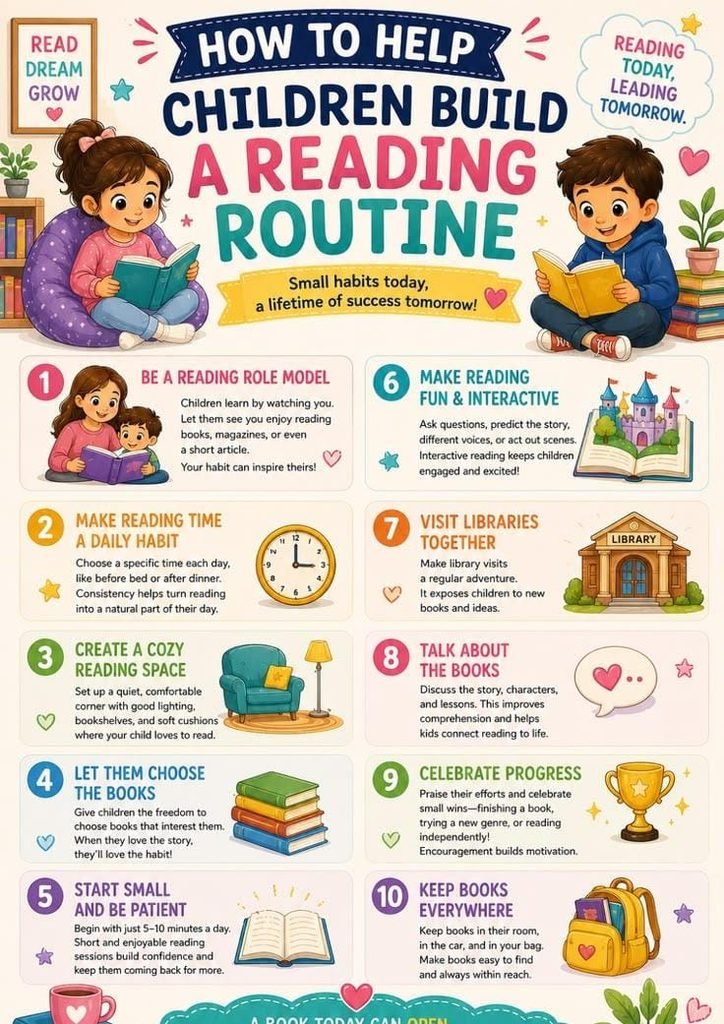
Reading is one of the most valuable screen-free activities for children. It supports language development, imagination, concentration, and emotional understanding.
Instead of treating reading like homework, make it a relaxing part of your daily routine. Let children choose books about animals, adventures, mysteries, fairy tales, or topics that genuinely interest them.
Younger children may enjoy colourful picture books, while older kids might prefer chapter books or illustrated stories. Parents can also introduce storytelling nights, where every family member takes turns reading or inventing a story.
Visiting a local library or creating a small reading corner at home can make books feel even more exciting.
Parent-friendly tip: Start with just 10–15 minutes of shared reading and gradually build the habit according to your child’s interest.
4. Organise Family Board Games and Puzzles
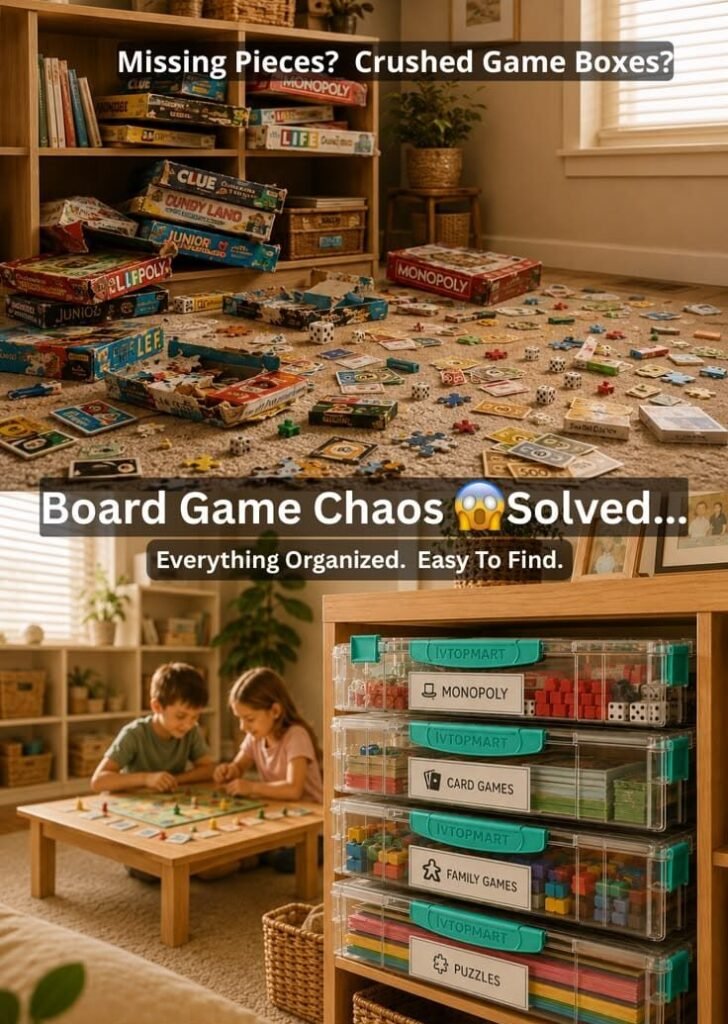
Board games and puzzles are fantastic alternatives to screen-based entertainment because they combine fun with learning. Depending on the activity, children can practise counting, problem-solving, strategic thinking, patience, and communication.
Choose age-appropriate games that match your child’s abilities. Simple matching games work well for younger children, while older kids may enjoy word games, strategy games, jigsaw puzzles, or family trivia challenges.
You do not need to purchase new games every month. Ordinary playing cards, homemade quizzes, and puzzles made from printed pictures can provide plenty of entertainment.
Family game nights also help children learn how to follow rules, take turns, and handle both winning and losing gracefully.
Parent-friendly tip: Keep games short enough to match your children’s attention spans, especially when introducing a new activity.
5. Let Kids Help in the Kitchen
Cooking together can turn an everyday household task into an enjoyable learning experience. Children often love feeling included in activities that adults usually manage themselves.
Depending on their age and abilities, kids can wash vegetables, mix ingredients, decorate biscuits, assemble sandwiches, or arrange fruit into colourful patterns. Older children can help measure ingredients and follow simple recipes under supervision.
Kitchen activities introduce basic maths, encourage creativity, and help children become more familiar with different foods. They also provide natural opportunities to discuss cleanliness, nutrition, and kitchen safety.
You might organise a homemade pizza afternoon or challenge your children to create a colourful fruit plate.
Parent-friendly tip: Prepare ingredients in advance and choose simple recipes to minimise mess and make the experience more enjoyable.


6. Encourage Imaginative Pretend Play
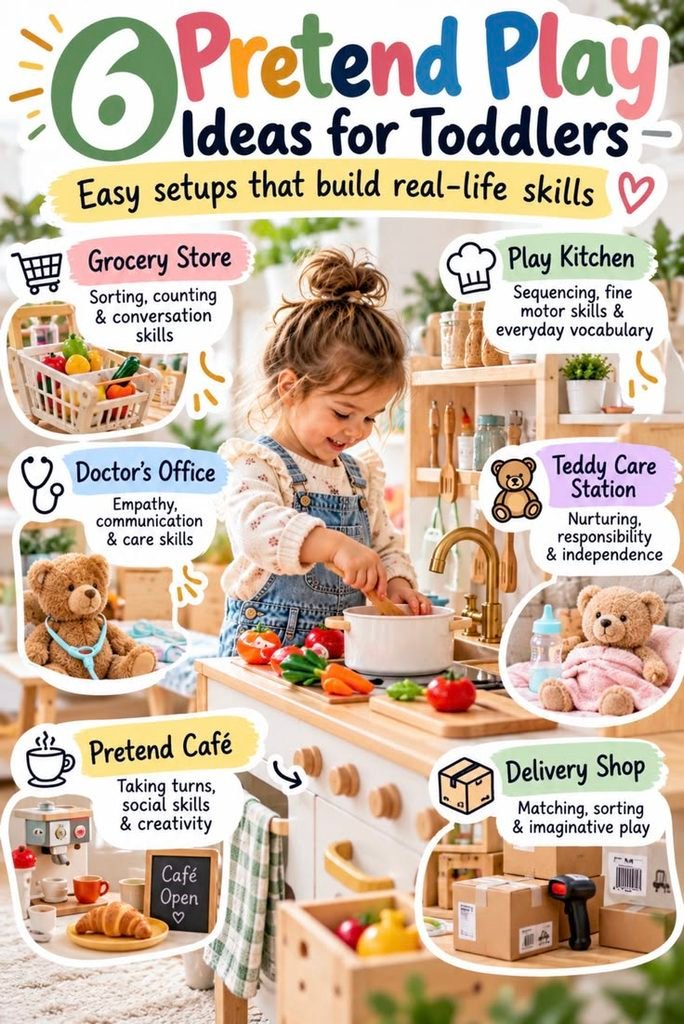
Pretend play allows children to explore ideas, express emotions, and practise social skills through imagination. It is particularly useful when kids need entertainment without elaborate toys or organised activities.
Turn a corner of your living room into a pretend shop, restaurant, hospital, school, or camping site. Old clothes, empty boxes, stuffed animals, and household objects can become useful props.
Children can take turns playing different roles, inventing conversations, and creating their own stories. Parents can join in occasionally without controlling every part of the game.
This type of play encourages language development, flexible thinking, cooperation, and creative problem-solving.
Parent-friendly tip: Offer a theme and a few safe props, then let your children decide how the story unfolds.

7. Introduce Gardening and Nature Projects
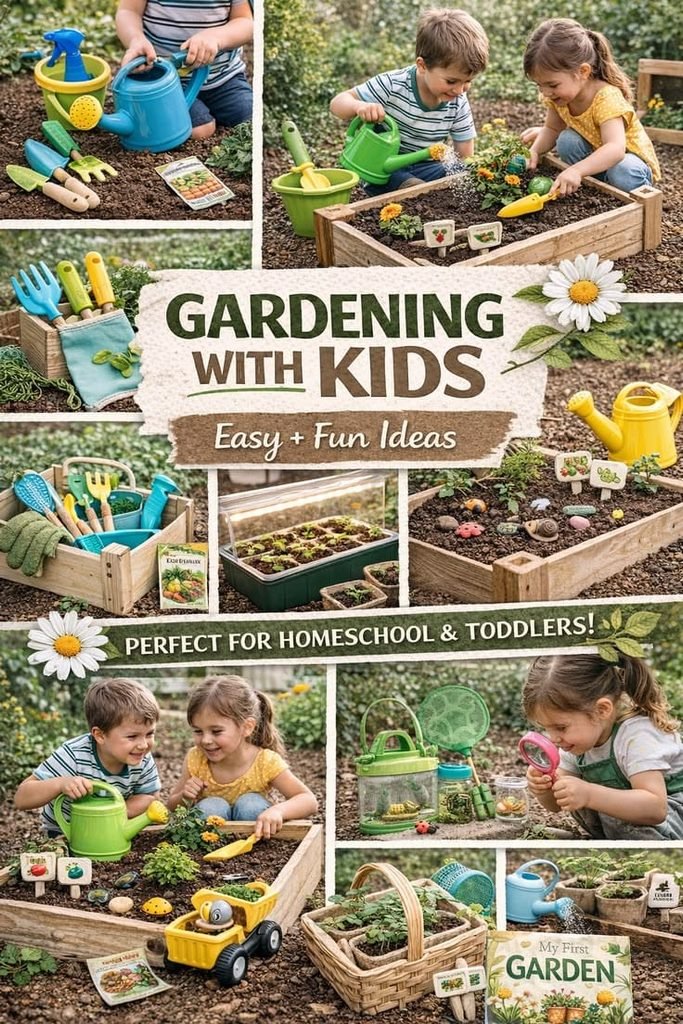
Gardening gives children a hands-on way to learn about plants, responsibility, and the environment. Even families with limited outdoor space can grow herbs or small plants in pots near a sunny window.
Let children help plant seeds, water seedlings, decorate plant pots, or observe how leaves change over time. They can keep a simple growth journal by drawing pictures or recording the height of their plants.
For a quick activity, grow easy-to-manage herbs or beans in suitable containers and observe their development together.
Gardening also teaches patience because plants require consistent care rather than producing immediate results.
Parent-friendly tip: Give each child a small plant to care for, using age-appropriate tools and adult supervision.

8. Create Fun Science Experiments at Home
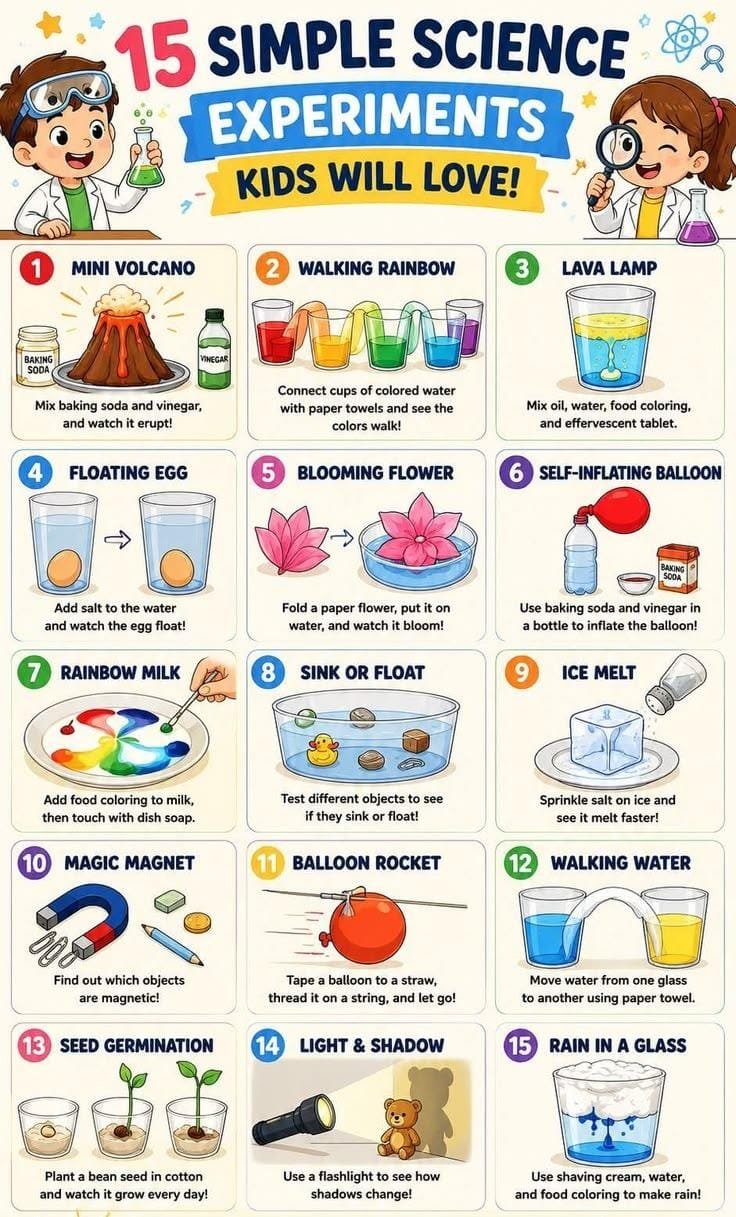
Children naturally ask questions about how the world works. Simple science experiments can turn that curiosity into exciting screen-free learning experiences.
Try making a baking soda and vinegar volcano, testing which household objects float in water, or exploring how shadows change throughout the day. Children can predict what will happen, observe the results, and explain their ideas.
These activities introduce basic scientific thinking without requiring complicated equipment. They also make learning feel like play rather than a classroom assignment.
Always choose experiments suitable for your child’s age and supervise activities involving liquids, small objects, or household ingredients.
Parent-friendly tip: Ask your child, “What do you think will happen next?” before beginning an experiment to encourage curiosity and reasoning.

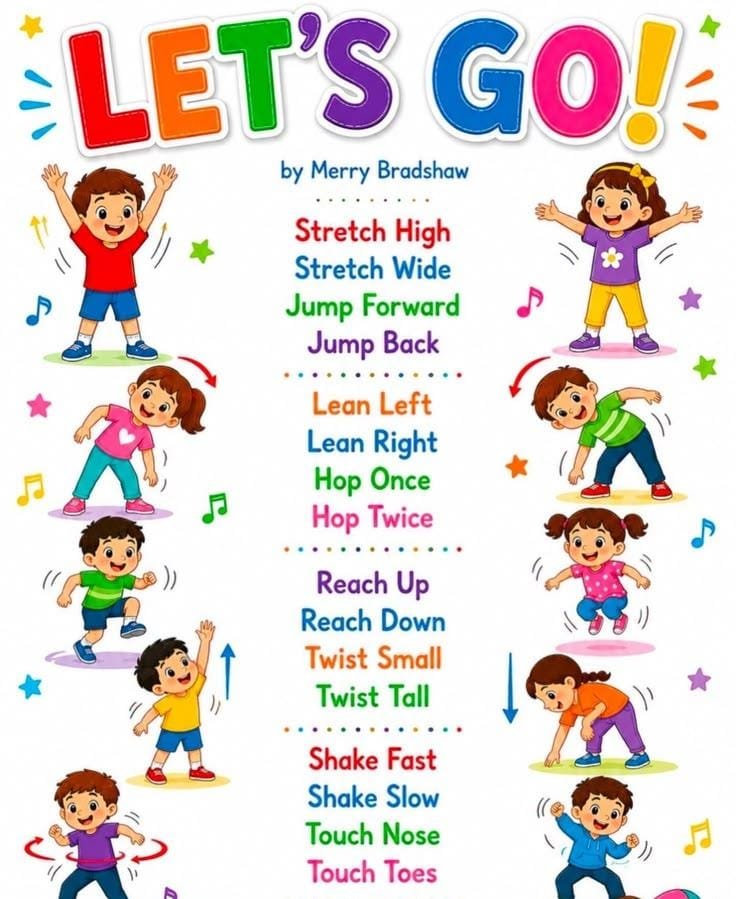
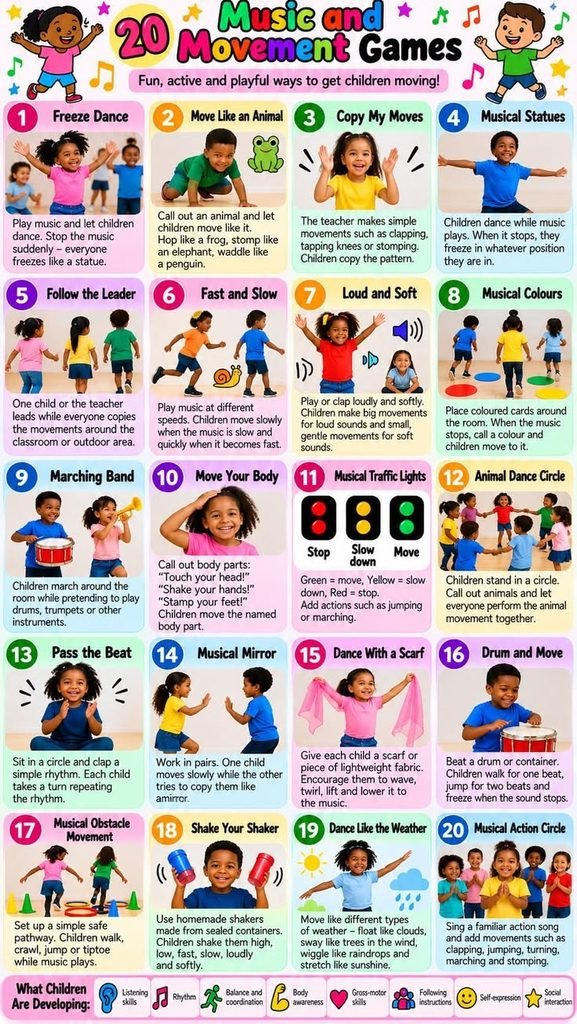
9. Encourage Music, Dancing, and Movement Games
Children need opportunities to move their bodies, release energy, and develop coordination. Music and movement games are easy ways to make that happen indoors or outdoors.
Organise a family dance party, play musical statues, create an obstacle course, or challenge children to invent their own dance routines. You can also introduce simple rhythm games using clapping, tapping, or homemade instruments.
These activities encourage physical movement, listening skills, creativity, and self-expression. They can be particularly helpful when children feel restless after sitting for long periods.
Parents can participate too, making the experience a shared family activity rather than another task for children to complete.
Parent-friendly tip: Keep a short playlist of family-friendly songs ready for moments when everyone needs an energetic break.
10. Build a Screen-Free Routine That Actually Works
The most successful screen-free activities are the ones that fit naturally into your family’s lifestyle. You do not need to eliminate every screen or organise an exciting activity every hour.
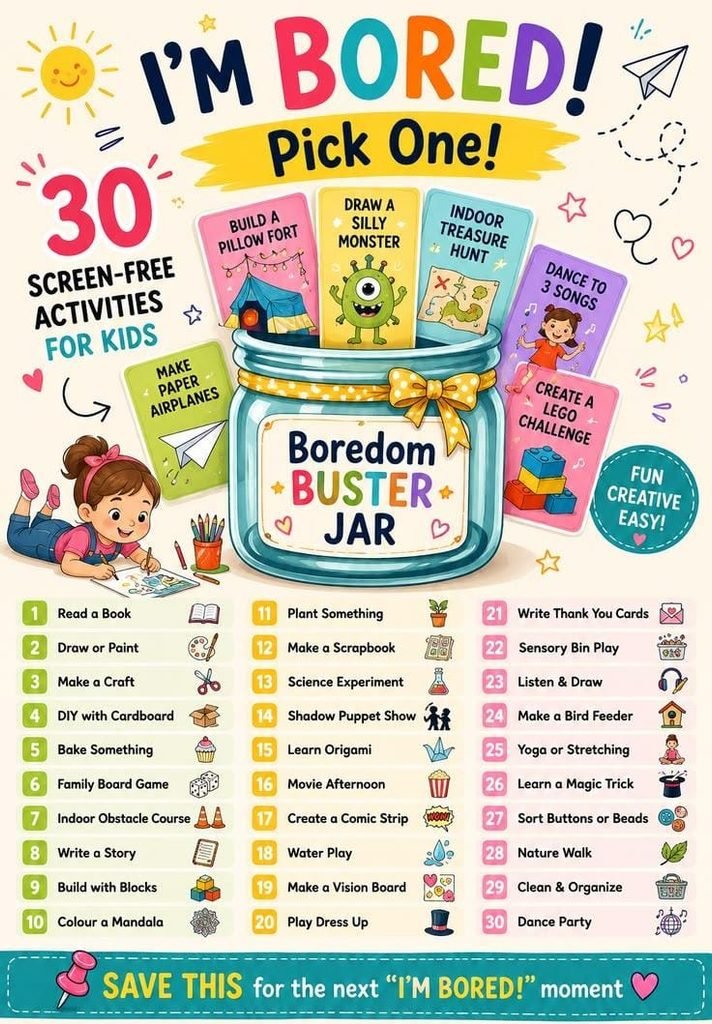
Instead, introduce manageable screen-free periods, such as reading before bedtime, outdoor play after school, or a weekly family game night. Keep a list of favourite activities somewhere children can access it independently.
Offer choices rather than issuing constant instructions. For example, ask whether your child would prefer drawing, building with blocks, or helping prepare a snack.
It is also important to consider age, personality, energy levels, and individual interests. Some children enjoy group activities, while others need quiet time to play independently.
Parent-friendly tip: Start with one predictable screen-free period each day and adjust the routine as your family discovers what works best.
Final Thoughts: Make Room for Real-World Fun
Screen-free activities do not have to be perfect to be meaningful. Sometimes, the most memorable childhood moments come from building a blanket fort, baking slightly messy cookies, discovering a tiny plant, or laughing together during a family game.
The goal is not to make technology the enemy. It is to give children a healthy balance of digital entertainment, physical movement, creative exploration, and real-world connection.
Start with a few simple ideas, follow your child’s interests, and allow room for unstructured play. With consistency and a little imagination, you can create an environment where children learn, explore, and enjoy themselves beyond the screen.
Ultimately, the activities parents love most are often the ones that keep children happily engaged while creating opportunities for connection, confidence, and lasting family memories.

Much needed points ..
Great article